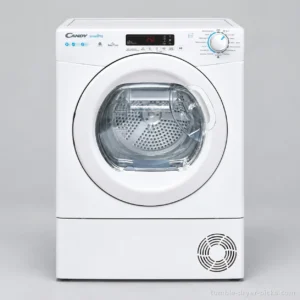
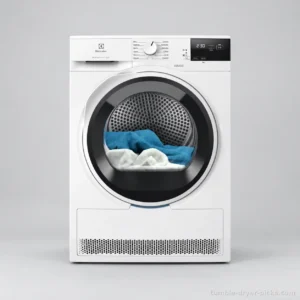
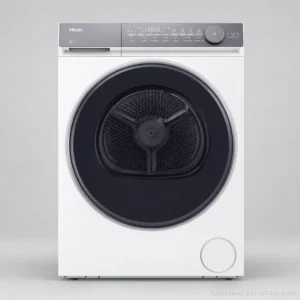
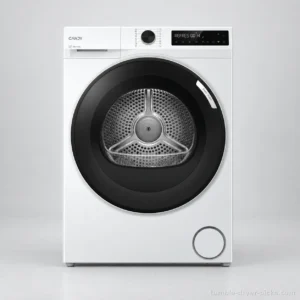
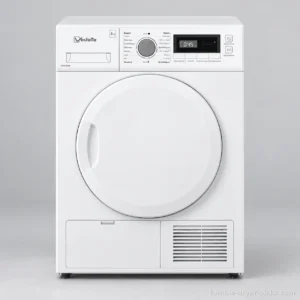
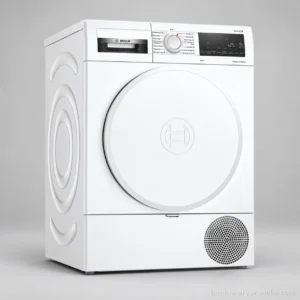
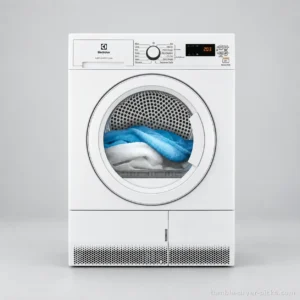
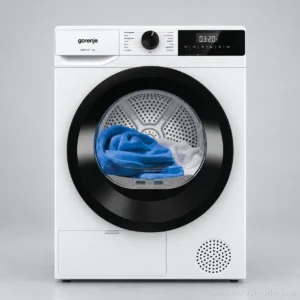
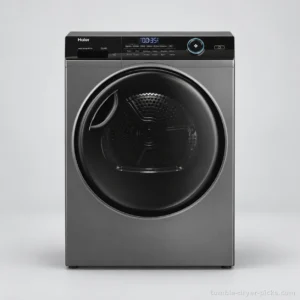
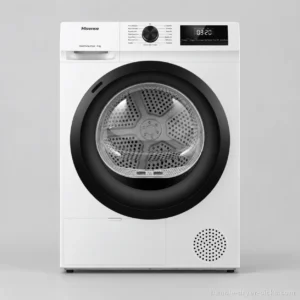
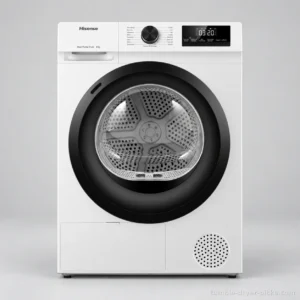
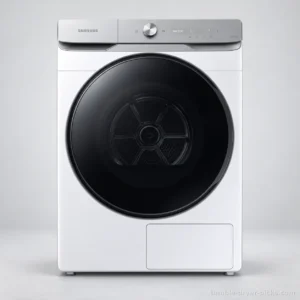
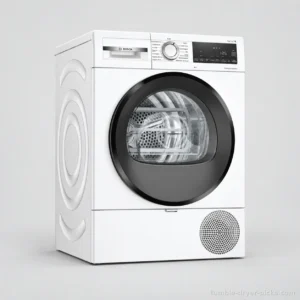
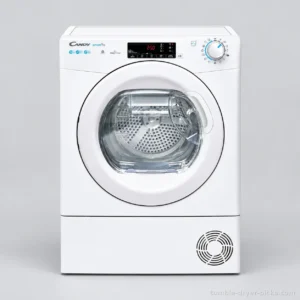
Candy CSOE H11A2TE-S
Top-ranked for load capacity.
View analysis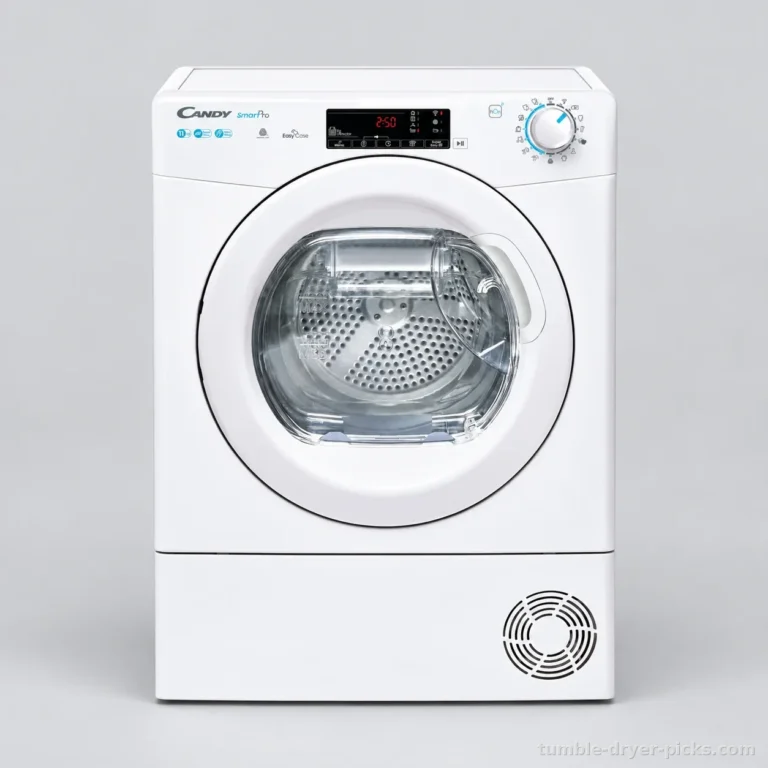 Our rankingsThe best tumble dryers40 tumble dryers
By drying type
By colour
By installation
By energy class, A to G label
Features and options
Guides to help you choose
Underestimating the space needed can make installing a freestanding tumble dryer more difficult. Our selection of models helps you compare dimensions and capacity to find an appliance suited to your home and laundry.
Prices recorded from retailers are for guidance only: they may have changed since. The current price is the one shown by the retailer. No price is shown for models sold only on Amazon. Amounts converted from reference prices in euros using an exchange rate from a specified date.
Top-ranked for load capacity.
View analysis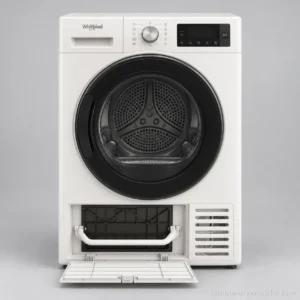
Its strength: equipment, rated 9.1/10.
View analysis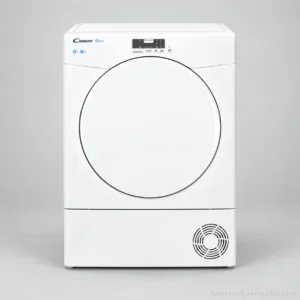
Its strength: drum volume, rated 9.3/10.
View analysis| Ranking | Score | Price | Load capacity | Width | Depth | Height | Noise level | Electrical power | Drum volume |
|---|---|---|---|---|---|---|---|---|---|
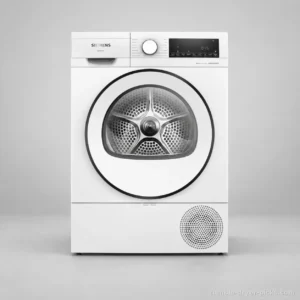
| 1. Candy CSOE H11A2TE-S | 9/10 | $403 | 11 kg | 59.6 cm | 60.7 cm | 85 cm | 66 dB | N/A | 125 L |
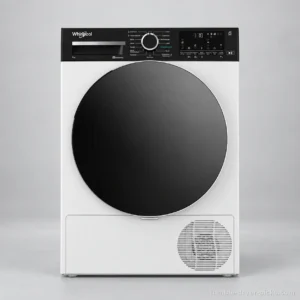
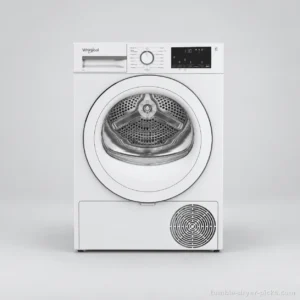
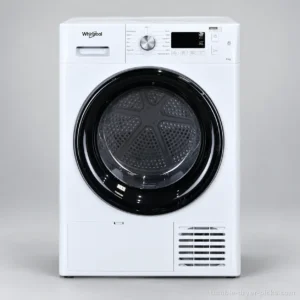
| 2. Whirlpool FFTDNM229X2BSFR | 8.8/10 | $515 | 9 kg | N/A | N/A | N/A | 64 dB | 850 W | 120 L |
| 3. Candy EYE H8A2L-S | 8.6/10 | $453 | 8 kg | 59.6 cm | N/A | 85 cm | 67 dB | N/A | 125 L |
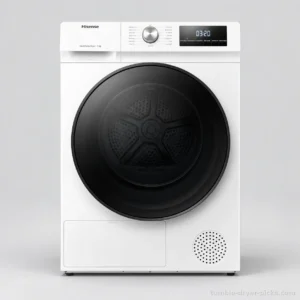
| 4. Hisense DHQA902U | 8.6/10 | $539 | 9 kg | 59.5 cm | N/A | 84.5 cm | N/A | 700 W | 120 L |
| 5. Whirlpool CWD86MWBRFR | 8.6/10 | $743 | 8 kg | 59.8 cm | N/A | 84.6 cm | 60 dB | 600 W | 127 L |
Rankings are based on our analysis scores, calculated by comparing manufacturer specifications across the full catalogue.Our methodology.
The best freestanding tumble dryer is the one that suits your space, your laundry and your washing routine. Freestanding refers to an installation format, not a drying technology: the appliance has its own outer casing and does not need to be fitted behind a cabinet door.
A freestanding tumble dryer can therefore use heat pump, conventional condenser or vented technology. This distinction matters more than appearance alone when determining the connections required and comparing running costs. A heat pump tumble dryer is also a type of condenser dryer.
The appeal of a freestanding appliance lies in its flexible placement. You can consider several locations without needing cabinetry specifically designed for a built-in appliance. However, this does not mean it can operate anywhere: the conditions specified in its manual remain essential.
A freestanding appliance suits homes with a suitable space in a utility room, kitchen or another room approved by the manufacturer. In a small home, installation under a worktop or stacking may also be possible, only if the appliances and their manuals allow it.
Before choosing a location, check the points that could prevent installation:
Stacking requires checking the compatibility of the washing machine, tumble dryer and the kit intended to secure them. For installation under a worktop, do not assume that the appliance's top can be removed. In a room near the living room or bedrooms, also consider the documented noise level and when you plan to use it.
A tumble dryer becomes particularly useful when you do frequent loads, lack space to hang laundry or struggle to dry clothes at home. It helps keep towels, sheets and clothes suitable for tumble drying in regular rotation. Its usefulness therefore depends more on your habits than on household size alone.
If your main aim is to minimise manual adjustments, a tumble dryer with automatic drying control is worth considering. A tumble dryer with a remaining time display can be useful for planning laundry. Check these features in each model's specifications without assuming guaranteed accuracy.
These ranges are not prices for specific models. Include delivery, any accessories and electricity consumption when comparing the overall budget.
The selection on this page will help you match these needs to each appliance's documented features. Start with the location and how you plan to use it, then compare the trade-offs between capacity, energy consumption, programmes and maintenance.
The best tumble dryer for freestanding installation is one that fits your home, handles your usual loads and suits your laundry routine. Freestanding refers to the installation type, not the drying technology. To choose, first consider the location, then the programmes and overall cost.
Measure the space before comparing appliances. Available width alone is not enough: the depth must allow room for connections and for the door to open fully. Also check the route to the room, particularly doorways and stairs.
Installation under a worktop requires explicit compatibility. Do not assume the top can be removed. To stack a washing machine and tumble dryer, check that the appliances and stacking kit are compatible. In a garage, also check the permitted ambient temperature range.
A heat pump tumble dryer is a type of condenser dryer. It recovers heat for reuse. It is an option to prioritise for frequent use, while checking the stated energy consumption and programme durations of each model.
A conventional condenser dryer uses a heating element to warm the air. Compare its running costs with those of a heat pump model before letting the purchase price sway your decision. A vented tumble dryer requires a suitable air outlet to the outside. If this is not possible, rule out this technology.
| Criterion | What to look for | Common mistake |
|---|---|---|
| Installation | A location that meets the manual’s requirements, including connections | Measuring only the width |
| Technology | Operation suited to your home and frequency of use | Confusing freestanding installation with condensation drying |
| Capacity | A permitted load suited to the programmes used | Relying solely on the maximum capacity |
| Energy consumption | Values compared using the same standard | Directly comparing different labels |
| Maintenance | Easily accessible filters and water tank | Neglecting routine maintenance |
Start with the laundry you actually tumble dry, rather than just the number of people in your household. If some of your clothes dry on a drying rack, the entire washing machine load will not necessarily go into the tumble dryer.
The permitted load for each programme matters as much as the rated capacity. Check the programme chart for synthetics, delicate fabrics and bulky items. A high maximum capacity does not guarantee that a duvet is suitable: check the appliance manual and the fabric care label.
Compare figures established using the same standard and comparable loads. On the energy label, check energy consumption, capacity, reference programme duration and noise level. Do not directly rank appliances using letters from old and new labels.
A tumble dryer with automatic drying control is worth considering if you want the cycle to adjust to the moisture detected. Check which programmes support this feature. A tumble dryer with a remaining time display makes planning easier, but the estimate may change during the cycle.
To set your budget, compare available offers, including delivery, installation, accessories and any stacking kit.
At entry level, prioritise essential functions. To justify spending more, look for a documented benefit: lower energy consumption, easier maintenance or a genuinely useful programme. Connectivity alone does not guarantee better drying.
The electricity cost is calculated from the documented energy consumption per cycle, multiplied by how often you use the appliance and your electricity rate per kWh. If consumption is stated for a set of cycles, first calculate the consumption per cycle. The result remains an estimate that depends on loads and programmes.
Read the cleaning instructions before buying. Check access to the filters, the maintenance required for the heat exchanger and how the water tank is handled. Direct condensate drainage can eliminate manual emptying if the appliance and your installation allow it.
To assess repairability, look for information about available spare parts, the conditions for obtaining them and after-sales service. A brand's reputation is no substitute for these concrete details.
Check installation requirements before considering optional features. For frequent washing, focus first on consumption and maintenance. For back-to-back loads, check the duration of the programmes you need. For bulky laundry, check the load restrictions. Then choose the appliance that meets these needs within your overall budget.
The available sources do not establish any tumble dryer brand as the most reliable. The drying performance described in an analysis does not prove how long the appliance will last. When choosing, look instead at spare parts availability, warranty terms and after-sales support for the model you are considering. Documented recurring problems with a model are more useful than a general reputation, whether positive or negative.
The available sources do not justify advising against any brand as a whole. Instead, rule out a model whose requirements are incompatible with your home or habits. An unavailable manual, unclear repair terms or documented recurring problems deserve your attention. Also check programme limitations: a tumble dryer with automatic drying control still requires you to follow the care instructions for each fabric.
A freestanding tumble dryer is a standalone appliance, while a built-in model is designed to fit into cabinetry under specific conditions. Freestanding refers to the installation type, not the drying technology. It therefore guarantees neither a fit under your worktop nor compatibility with an enclosed recess. Consult the model's manual for the required clearances, ventilation and permitted configurations.
Yes, if the tumble dryer's manual permits this installation and the space meets all its requirements. Measure the available height, width and total depth, including connections. Also allow room to open the door and access the parts that need maintenance. Do not remove the top of the appliance unless the manufacturer explicitly permits it. An appliance that fits under the worktop is not necessarily suitable for that location.
Yes, provided the appliances are compatible and their documentation permits this configuration. Check the stacking kit specified for the models concerned, their dimensions and stability requirements. Similar widths alone do not establish compatibility. Also check access to the controls, water tank and filters. Before buying, have the exact combination confirmed by the manufacturer or the installer responsible for fitting it.
A heat pump tumble dryer is suitable for an unheated garage only if conditions in the room meet those specified in its manual. In particular, check the permitted ambient temperature range and the requirements for humidity and ventilation. Do not rely solely on the garage temperature on the day of purchase: take cold periods into account. Without documentation for the chosen model, its suitability for that location remains unconfirmed.
A water drain is not always necessary: it depends on the model's technology and features. Check its manual to see whether condensation is collected in a tank or can be directed to a drain. For a vented appliance, check the requirements for venting air outdoors. The term “freestanding” tells you nothing about these connections. Also check whether the necessary accessories are included or must be purchased separately.