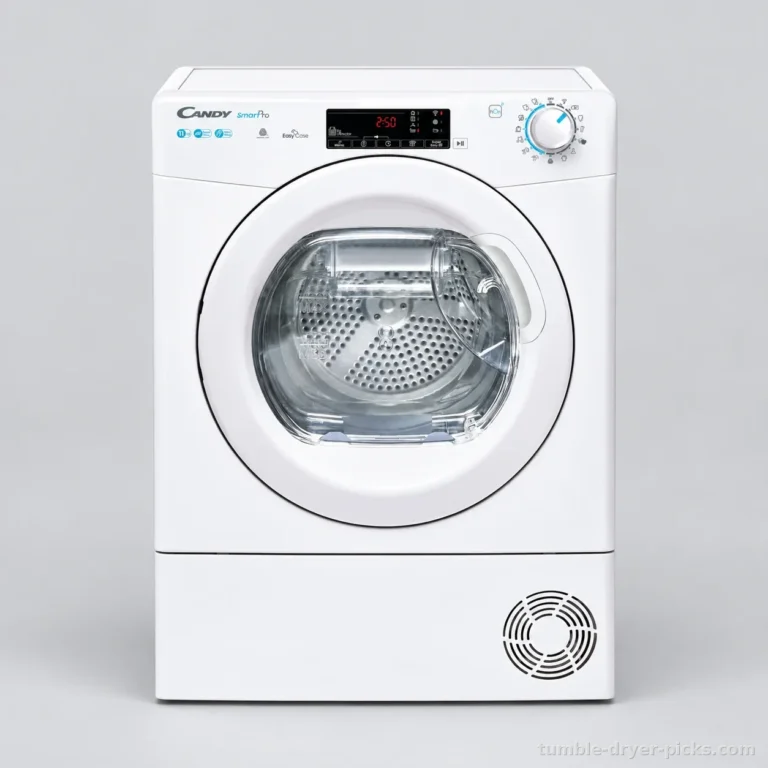
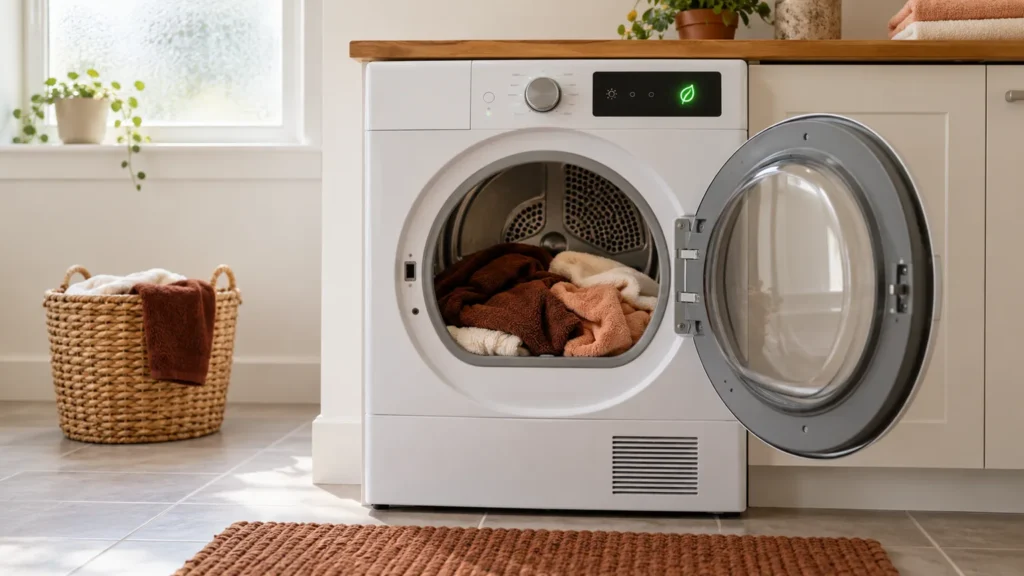
Best tumble dryer with energy rating A 2026, picks and comparison
A wide range of options is available among energy class A tumble dryers, from entry-level to high-end models. Our selection helps you understand how differences in features actually affect your laundry.
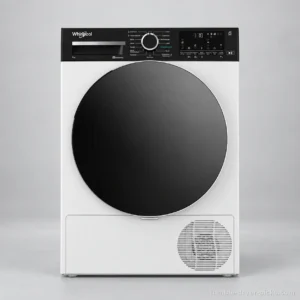
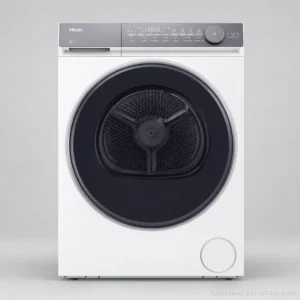
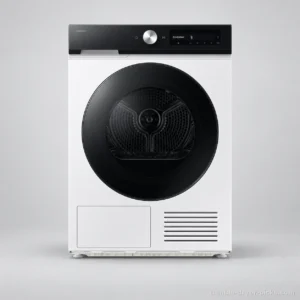
Prices recorded from retailers are for guidance only: they may have changed since. The current price is the one shown by the retailer. No price is shown for models sold only on Amazon. Amounts converted from reference prices in euros using an exchange rate from a specified date.
Why these models are listed here
- 3 selected models because they have the feature “Energy rating A” according to data published by manufacturers and retailers.
- View methodology →
- No brand pays to appear in this selection or to rank higher.
Why choose an energy class A tumble dryer?
Why look for an energy class A tumble dryer in 2026
The best energy class A tumble dryer combines verified energy efficiency with a capacity that suits your laundry loads and installation requirements compatible with your home. The A rating is a useful guide, but it alone cannot identify the right model for you.
This search is particularly relevant if you regularly tumble dry your laundry. Families, households without outdoor space or homes where laundry is difficult to dry may benefit from prioritising energy efficiency. The aim is to reduce the energy needed for drying, without promising the same savings for every household. Cycle frequency, load size and the spin cycle beforehand also affect consumption.
Make sure, however, that you compare consistent information. An A rating and an A+++ rating cannot be treated as directly equivalent classifications. The exact model reference, its energy label and its information sheet must match before you draw any conclusions. Energy class alone does not describe drying performance, noise or ease of maintenance either.
Why heat pump technology deserves your attention
A heat pump tumble dryer recovers some of the heat from its circuit and reuses it during drying. This reduces the energy needed to heat the air. It deserves your attention if you want an energy-efficient appliance for frequent laundry loads.
The 4 models in this selection use this technology. This is a shared feature, but it does not automatically establish that they belong to energy class A. Technology and energy rating remain 2 separate pieces of information, each of which needs to be checked independently.
To decide whether this type of appliance suits you, start with your practical requirements:
- You do frequent loads of laundry and want to prioritise energy efficiency.
- You have limited space to hang laundry, especially during damp periods.
- You want a capacity that matches your usual loads.
- You need to consider noise and clearance for the dryer door in your home.
Convenience matters too. A tumble dryer with a time remaining display can make it easier to organise your laundry. However, this feature cannot replace a suitable capacity or careful installation planning.
How our selection helps you decide
Our approach is based on analysing documented specifications. We compare capacities, drum volumes, stated noise levels and water drainage options. We distinguish practical benefits from information that needs confirmation, without claiming to have handled the appliances.
When considering your budget, think in terms of entry-level, mid-range or high-end positioning. An additional feature only justifies a larger budget if it meets your needs. Connectivity, programmes and settings should therefore be prioritised after the essential criteria.
The selection on this page will help you match each model to your priorities. Consult the comparison table, then the concise analyses to identify relevant trade-offs and points to check before buying.
How do you choose an energy class A tumble dryer?
To choose the best tumble dryer with an A energy rating, first check the label for the exact model, then the capacity, installation requirements and features suited to your laundry. An analysis of the specifications reveals useful differences between the 4 appliances, but their energy ratings are not documented equally clearly.
How to check that the A rating refers to the right label
An old A+++ rating and an A rating on a new label cannot be compared directly. Ask for an energy label and product information sheet that match the exact model being sold. The energy rating alone does not indicate drying quality.
For the Whirlpool CWD86MWBRFR and Samsung DV90DG6845LK, have the rating confirmed before considering these models as A-rated appliances.
All 4 models use a heat pump. Choosing a heat pump tumble dryer is therefore not enough to distinguish between them or guarantee their energy rating.
What capacity suits your usual laundry loads
Start with the laundry you actually dry, rather than just the number of people in your household. If your loads are moderate, a larger capacity is not necessarily a deciding factor. If you regularly dry large loads, it deserves more attention.
The Whirlpool lists a capacity of 8 kg and a drum volume of 127 L. Capacity and drum volume describe different aspects: the Whirlpool has the largest volume here, despite its lower rated capacity. However, this does not establish that it dries bulky items better.
How to check that the appliance will fit in your home
Measure the installation space, the access route to the room and the clearance needed in front of the door. The Whirlpool is 67,4 cm deep. The dimensions listed for the Haier are contradictory: ask for confirmation before planning to install it in a tight space.
The Whirlpool door is hinged on the right and the Haier door on the left, and neither is reversible. The Samsung models have reversible doors, an advantage if a wall or cabinet obstructs opening.
For direct drainage of condensed water, a connection is explicitly possible on the Whirlpool and Haier, with a Y connector that is not included. The Samsung models are described as having a tank that needs emptying. Check any drainage connection options separately.
Give this factor more weight near a living area, without expecting silent operation.
Which features really suit your laundry
Choose features that meet a specific need in your routine. The Whirlpool combines moisture sensors, a steam function and a remaining time display. It deserves consideration if keeping track of the cycle matters to your schedule.
The Haier offers 14 programmes, including Delicates, Wool, Duvet and Towels, as well as adjustable drying levels and an anti-crease option. If you are looking for a tumble dryer with a wool programme, this is therefore a model to consider, while checking the conditions of use in the manual.
The Samsung models list OptimalDry, QuickDrive and SmartThings. The DV90DG6845LK also lists 19 programmes. These names and this number alone do not establish superiority: check the settings relevant to your fabrics and what the app actually lets you do. No quick cycle duration is available here to compare them.
How to balance your budget without paying for unnecessary features
Define your essentials before choosing an entry-level, mid-range or high-end model. Suitable capacity, a door that works in your space and convenient drainage should take priority over a connected feature you will rarely use.
Also check cycle times, the warranty and repairability before buying. These aspects are not documented well enough to distinguish between the appliances. More features do not prove lower consumption or a longer lifespan.
Which model suits your priorities
| Model | Listed price | Drying capacity | Maximum noise level |
|---|---|---|---|
| Whirlpool CWD86MWBRFR | Check price with the retailer | 8 kg | ultra-quiet (60 db) |
| Haier HD90-A367U1-FR | Check price with the retailer | 9 kg | ultra-quiet (60 db) |
| Samsung DV90DB7845GE | Check price with the retailer | 9 kg | quiet (64 db) |
| Samsung DV90DG6845LK | Check price with the retailer | 9 kg | quiet (64 db) |
The Whirlpool CWD86MWBRFR deserves your attention for its large drum, sensors and steam function. Its fixed door opening needs to be factored into your installation.
The Haier HD90-A367U1-FR suits those looking for varied fabric programmes and drying settings. Clarify its dimensions and energy information before deciding.
The Samsung DV90DB7845GE and DV90DG6845LK both offer appealing features with their reversible doors and connectivity. Their documented specifications do not justify naming a winner between them.
Mistakes to avoid
- Automatically equating A+++ with the current class A.
- Choosing solely based on the stated capacity.
- Overlooking door clearance and connection accessories.
- Inferring precise energy consumption solely from the presence of a heat pump.
Key takeaways
Start with a verified energy rating, then rule out appliances that do not fit your space. Next, compare models based on your typical loads and fabrics. Additional features become deciding factors when they meet a specific need.
What should you know before drying your laundry?
Which clothes should not go in the tumble dryer?
Do not tumble dry clothes whose care labels prohibit it. For wool, silk, coated fabrics or items with glued-on details, check the care instructions before choosing a programme. A dedicated programme does not replace this check. The garment’s care label takes priority, even with a heat pump tumble dryer. Do not put fabrics soaked in solvents or flammable substances in the drum.
Should laundry be spun before going in the tumble dryer?
Yes, laundry should be spun before tumble drying, within the limits specified on its care label. The less water it contains at the start, the less the appliance needs to remove during drying. Choose a spin setting suited to the fabrics, without always opting for the highest speed. Then unfold the items and separate any that have become tangled to avoid loading the drum with tightly bundled laundry.
Can different fabrics be mixed in the same cycle?
Yes, if their care instructions and drying requirements are compatible. However, avoid combining lightweight items with thick fabrics that retain more moisture. Some clothes may still be damp while others are already dry. Group fabrics of similar thickness together and choose the programme to suit the most delicate items. A mixed programme, where available, still has the limits specified in the manual.
How often should tumble dryer filters be cleaned?
Check the lint filter after every cycle and remove accumulated fibres according to the instructions in the manual. For other filters and the condenser, follow the cleaning schedule and method specified for your appliance. A clogged-filter indicator is a useful reminder, but does not replace regular maintenance. Do not routinely rinse every component or remove a part without checking that the manufacturer allows it.
Can the water collected in the tank be reused?
The water in the tank is not safe to drink, and reusing it requires care. It may contain fibres and detergent residues. Do not assume it is distilled water that is automatically suitable for an iron or another appliance. Check the manufacturers’ recommendations before reusing it. If your main aim is to avoid emptying the tank, a tumble dryer with direct drainage of condensation water may be a suitable option, provided a compatible connection is available.
Why is laundry still damp after a drying cycle?
Damp laundry may result from overloading, mixing fabrics with very different drying needs, insufficient spinning or an unsuitable drying setting. First, check the selected programme and its permitted load. Then clean the filters and check the tank or drainage system, depending on your installation. If the appliance has moisture sensors, consult the manual for their maintenance procedure. If the problem persists after these checks, contact the after-sales service.
What should you check when the tumble dryer displays an error code?
Make a note of the exact code, then consult the manual for your tumble dryer model. Its meaning depends on the model: the same display does not indicate the same fault across all appliances. Only carry out checks intended for users, such as checking the tank, filters or whether the door is properly closed, if instructed. Do not dismantle the appliance to find the fault. If the code reappears, give it to the after-sales service along with the full model number.