Best tumble dryer with a household linen programme 2026, picks and comparison
After washing sheets and towels, drying depends on which fabrics you group together. Our selection of models helps you find a tumble dryer with a household linen programme suited to your needs.
Prices recorded from retailers are for guidance only: they may have changed since. The current price is the one shown by the retailer. No price is shown for models sold only on Amazon. Amounts converted from reference prices in euros using an exchange rate from a specified date.
Why these models are listed here
- 1 selected model because they have the feature “Household linen programme” according to data published by manufacturers and retailers.
- View methodology →
- No brand pays to appear in this selection or to rank higher.
Why choose a tumble dryer with a household linen programme?
Why household linens need special consideration
A tumble dryer with a household linen programme can make it easier to care for sheets, towels and table linen, provided the cycle allows the fabrics concerned. When choosing the best tumble dryer with a household linen programme, the deciding factor remains compatibility with your usual laundry loads, beyond the name shown on the control panel.
These items have different needs. A duvet cover takes up space and can trap other items inside. Thick towels retain more water than thin fabrics. A tablecloth requires particular attention to its fabric composition and the finish you want before ironing.
- For bed linen, look for conditions that allow large items to spread out in the drum.
- For towels, check the guidance on thick fabrics and the drying levels available.
- For table linen, prioritise care instructions and preparation for ironing over the programme name.
A bed linen programme does not automatically mean duvets or pillows can be tumble dried. Their suitability must be confirmed separately, on their care labels and in the appliance manual.
When a tumble dryer makes laundry turnaround easier
The benefits become clear when drying racks take up a room, towels struggle to dry between washes or bedding changes come in quick succession. A tumble dryer can then reduce reliance on space for air drying and make laundry easier to organise.
This type of appliance is particularly worth considering if you regularly wash bedding for several beds, lack space to hang large items or have few spare linens. The aim is to simplify laundry turnaround, without assuming that every fabric can go in the appliance.
For occasional use, first check that the programme suits the items that actually take up your drying space. For frequent use, the cycle's permitted load, installation requirements and maintenance become deciding factors. The appliance's rated capacity alone does not tell you how much each programme can handle.
A tumble dryer with a remaining time display can also help you organise consecutive loads. However, this feature helps with planning; on its own, it tells you nothing about how well sheets will dry.
What the programme name does not guarantee
The term “household linen” is a guide, rather than proof of better results. It does not guarantee even drying across all items, freedom from creases or disinfection. The manual should specify what the cycle can handle and any limitations.
Distinguish the advertised function from the benefit you want. A tumble dryer with an anti-crease function may be useful for sheets, but this feature does not promise to eliminate ironing. Similarly, a dedicated programme cannot compensate for an excessive load or an unsuitable fabric.
The selection on this page helps you identify models to consider. To choose between them, prioritise documented features that meet your main need, then confirm the programme restrictions before making your choice.
How do you choose a tumble dryer with a household linen programme?
To choose the best tumble dryer with a household linen programme, first check which fabrics are accepted and the load allowed for this cycle. The programme name alone is not enough to distinguish between appliances. Your choice should primarily suit the items you dry regularly, the results you want and the constraints of your home.
Which fabrics does the programme actually accept?
Start with the care labels on your sheets, towels and tablecloths, then check the restrictions in the appliance manual. A bed linen programme does not automatically mean that duvets, pillows or all fabrics are accepted.
List your usual needs so you can check each category separately:
- Sheets and duvet covers, whose large dimensions can make tumbling more difficult.
- Bath towels, which may vary in thickness.
- Table linen, where the fabric and finishes determine the precautions needed.
Rule out an appliance if its manual excludes a fabric that is a key reason for your purchase. A dedicated programme name is no proof of disinfection either.
What capacity do you need for large items?
Distinguish between the appliance's rated capacity and the maximum programme load. The figure highlighted in a product listing does not necessarily apply to every cycle. Look for the limit specified for the programme you will actually use.
Base your decision on your usual laundry loads. If you want to dry your bed linen after every wash, check that the corresponding load can be handled without exceeding the recommendations. For bulky items, also look for specific loading instructions: weight alone does not describe how much space they take up.
If the restrictions mean you always have to split your laundry loads, consider whether this arrangement still fits your routine.
Which settings should you check to achieve the drying results you want?
Decide on your priority before comparing features. For towels you want to put away, look for a suitable cupboard-dry setting. For tablecloths you intend to iron, check for a setting designed to retain an appropriate level of residual moisture.
Then examine the information on moisture sensing, drying levels and tumbling. Confirm that these features are listed in each appliance's documentation. They provide criteria for comparison, but do not guarantee even drying of large items on their own.
A tumble dryer with an anti-crease function may also appeal to you if you cannot remove the laundry as soon as the cycle ends. However, check which programmes support this function.
How should you compare energy consumption and budget?
Compare energy labels on the same basis and identify which programme the figures refer to. The reference cycle's consumption does not necessarily reflect that of the household linen programme. Check the information specific to that programme where available.
If you are considering a heat pump tumble dryer, also check the installation requirements and energy specifications of your chosen model. The technology does not replace this comparison.
When considering your budget, think in terms of entry-level, mid-range and high-end models, without assuming that a higher positioning necessarily improves sheet drying. Focus on the features useful for your fabrics. No sufficiently documented range is available here to establish reliable thresholds for these categories.
| Criterion | What to look for | Common mistake |
|---|---|---|
| Compatibility | Explicit approval for the textiles concerned | Treating sheets, duvets and pillows alike |
| Programme load | A limit suited to your laundry | Relying solely on the rated capacity |
| Settings | Results suited to cupboard storage or ironing | Choosing based on the number of programmes |
| Energy consumption | Comparable figures and their reference cycle | Applying a figure to every cycle |
| Installation | Installation that follows the manual | Measuring only the available width |
What constraints should you check in your home?
Measure the installation space, the access route needed for installation and the clearance for opening the door. Then check the permitted ambient conditions, how water is collected or drained, and access to maintenance components.
Also consider the declared noise level, especially near a bedroom or living area. A freestanding tumble dryer must be installed in accordance with its manual, with the required clearances. Do not assume it will fit under your worktop just because its dimensions appear compatible.
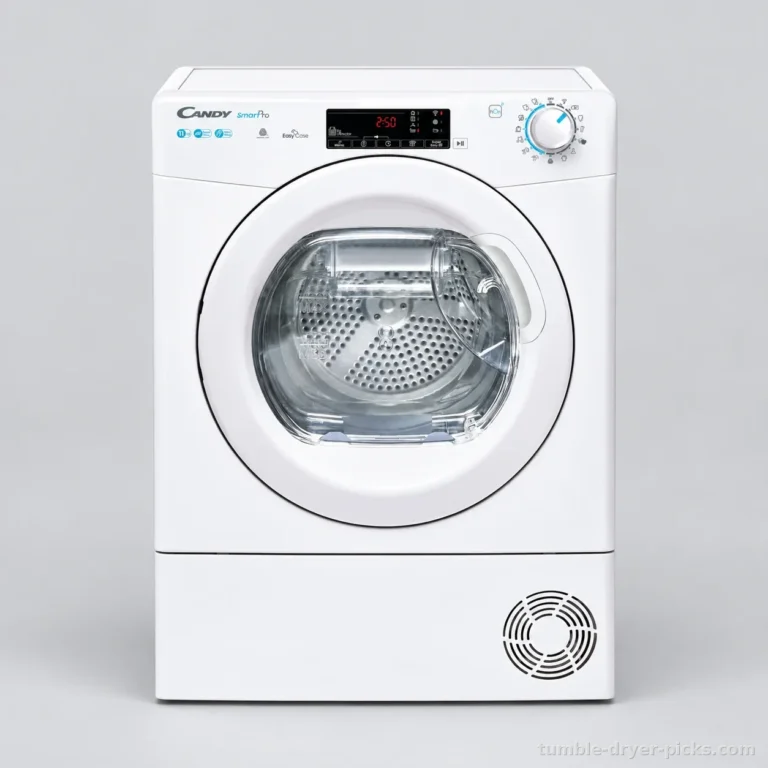
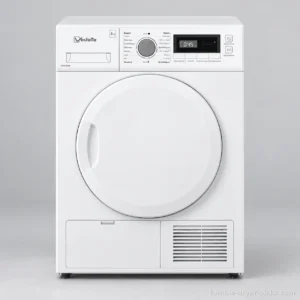
How do you choose between the Candy EYE H8A2L-S and the Vedette VSF318HW?
Detailed textile compatibility, programme load, settings and installation requirements still need to be checked for each model.
Request their manuals and compare these points in the same order. Choose the model whose specifications confirm that it meets your needs. If a crucial detail remains unavailable, request written confirmation before buying.
Mistakes to avoid
- Choosing solely because a programme is called “household linen”.
- Confusing rated capacity with the permitted load for the dedicated cycle.
- Assuming a model has a feature without documentary confirmation.
- Overlooking maintenance, door clearance or installation conditions.
Key takeaways
The main criterion remains how well the programme suits your fabrics. Then check the permitted load, the drying results you want and the installation requirements. A preference for any model in this selection is only justified by a documented difference that meets these needs.
What precautions should you take when drying sheets and towels?
Can you dry sheets and towels together?
It is best to separate sheets and towels when their thickness or drying instructions differ. Towelling fabrics may need more drying time, while larger items may wrap around them. Check the care labels and the instructions for the selected programme. For more even results, group similar fabrics together and observe the programme’s maximum load, which may differ from the appliance’s stated capacity.
How can you stop sheets from balling up in the tumble dryer?
To reduce balling, unfold each sheet before placing it in the drum and avoid overloading it. Large items need room to move freely. If the manual allows it, pause the cycle to untangle them, then resume drying. A bedding programme may use settings suited to these items, but its name alone does not guarantee that they will not become tangled. Check its loading instructions before choosing your appliance.
Why does a duvet cover stay damp inside?
A duvet cover may stay damp inside if it twists around itself or traps other items, restricting airflow between the layers. Overloading or an unsuitable setting can also contribute to the problem. Unfold the cover and check thick areas before extending the drying time in line with its care label. If this keeps happening, reduce the load and check the filters as directed in the manual.
Should you fasten the buttons on a duvet cover before drying?
Fastening the buttons on a duvet cover may help prevent smaller items from getting inside, provided its care instructions allow it. However, this does not guarantee that it will not twist around itself. Also check the recommendations for zips and decorative details. Before loading, make sure the cover is empty and unfolded, then leave enough room in the drum for it to open out.
How can you reduce creasing in sheets after the cycle ends?
Remove sheets promptly after the cycle, shake them out, then fold or hang them rather than leaving them bunched up in the drum. Also avoid drying them more than necessary. If you intend to iron them, check whether the appliance offers a suitable drying level. A tumble dryer with an anti-crease function can be useful when you cannot remove the laundry immediately, but this function does not guarantee crease-free sheets or replace ironing.
Are dryer balls useful for household linen?
Dryer balls are an optional accessory whose usefulness depends on the load and the manufacturer’s recommendations. They do not replace a suitable programme or loading that gives fabrics room to move. Before adding them, check that they are compatible with the appliance and the laundry. Do not assume they will always reduce cycle time or electricity consumption. When comparing appliances, prioritise documented features over claims associated with this accessory.
Can you put laundry away while it is still warm?
You can put laundry away while it is still warm if it is completely dry, but let it air if you are unsure whether it is damp. Pay particular attention to seams, hems and areas that have remained folded. Warmth does not prove that drying is complete. Let the cycle finish, including its cooling phase where applicable. A tumble dryer with a remaining time display helps you plan when to remove the laundry, but does not replace this check.