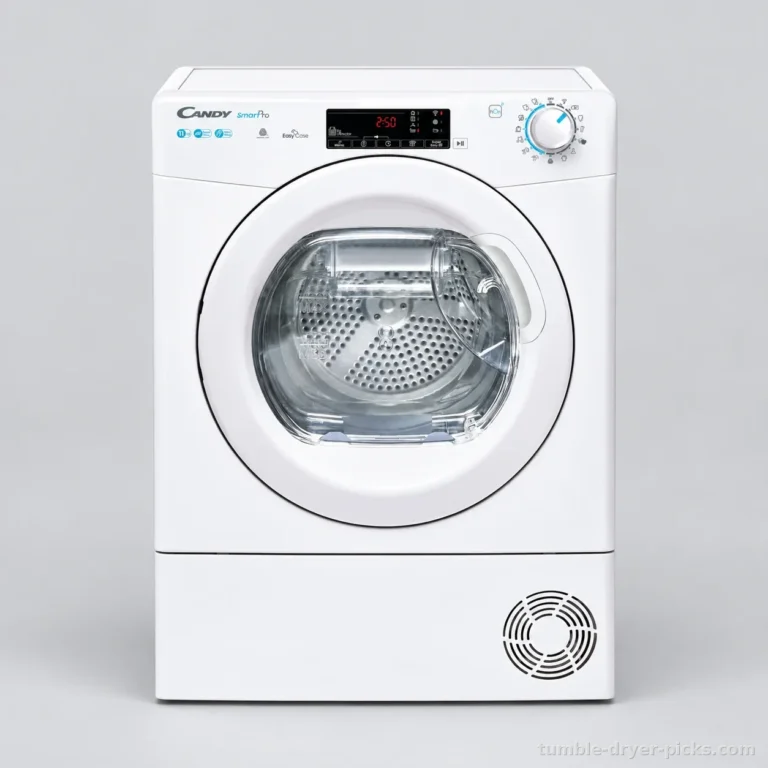
Best tumble dryer with an anti-crease function 2026, picks and comparison
Drum movements after drying are a key factor when comparing models. The benefits of a tumble dryer with an anti-crease function depend in particular on when the function activates and when you collect your clothes.
Prices recorded from retailers are for guidance only: they may have changed since. The current price is the one shown by the retailer. No price is shown for models sold only on Amazon. Amounts converted from reference prices in euros using an exchange rate from a specified date.
Why these models are listed here
- 2 selected models because they have the feature “Anti-crease” according to data published by manufacturers and retailers.
- View methodology →
- No brand pays to appear in this selection or to rank higher.
Why choose a tumble dryer with an anti-crease function?
Why laundry creases after drying
A tumble dryer with an anti-crease function is particularly useful if you cannot remove your clothes as soon as the cycle ends. Its purpose is to reduce creasing caused by laundry sitting still in the drum. This can make it easier to prepare clothes for storage or ironing.
When fabrics remain piled up after drying, clothes press against each other. Some areas stay folded and may retain creases. The result depends on factors such as the fabric, the load and how long it stays in that position. A shirt and a towel do not react in the same way.
Depending on the appliance, the anti-crease function may involve drum movements after drying. These movements aim to prevent laundry from staying in the same position for too long. However, check the manual for details of how it works: a marketing name alone does not tell you what an appliance can do.
What an anti-crease function can actually do for you
The expected benefit is less creased laundry when it comes out of the drum, potentially with fewer creases to iron out. This function mainly gives you more flexibility in your routine. It does not guarantee immaculate clothes if you open the door long after drying has finished.
You should also distinguish an anti-crease function from a crease-removal function or a steam programme. These terms do not necessarily refer to the same mechanism or purpose. The presence of any of these features does not imply that the others are included. To choose the best tumble dryer with an anti-crease function for your needs, start by understanding what each appliance actually does.
A few habits remain essential for reducing creases:
- Stay within the load limit for the selected programme so clothes have room to move.
- Choose a drying level suited to the fabrics and their care requirements.
- Remove laundry as soon as possible, then unfold it and hang it up or fold it.
The anti-crease function complements these habits. It does not always compensate for an overloaded drum or an unsuitable setting. Choosing a heat pump tumble dryer involves a separate consideration: this technology alone does not tell you how the anti-crease function works.
Who benefits most from this function
This function is particularly suitable for people whose schedules do not always line up with the end of laundry cycles. If a meeting, a journey or family commitments delay you from removing the laundry, it can help reduce the impact of that wait. A tumble dryer with a remaining-time display can also help you plan for the end of the cycle.
It is also worth considering if you regularly dry clothes that need to look presentable. First, check that they are suitable for tumble drying. If you always empty the drum immediately, the additional benefit will probably be more limited.
To narrow down your choice, browse the selection on this page with your routine in mind. Focus on comparing how the anti-crease function works and which programmes support it, where this information is available: a useful function is one that meets your practical needs.
How do you choose a tumble dryer with an anti-crease function?
To choose the best tumble dryer with an anti-crease function, first check how this function works and under what conditions it operates. Then compare the capacity suited to your laundry, the drying settings and the installation requirements. A marketing label alone is not enough to distinguish between appliances.
How to check what the anti-crease function does
Anti-crease can refer to several mechanisms. Rotation after drying keeps laundry moving to prevent it from sitting in a compressed pile. Reverse rotation refers to changes in the drum’s direction. A steam programme is a separate function, and its inclusion must be explicitly confirmed.
Read the manual before choosing. Look for compatible programmes, activation instructions and the duration of the relevant phase. If you often collect your laundry late, prioritise a function that works for that length of delay. Do not confuse reducing creases with eliminating the need for ironing: the result also depends on the fabric, the load and how laundry is put away after drying.
What capacity should you choose for your usual laundry loads
Start with the laundry you actually tumble dry, rather than just your washing machine’s capacity. If some clothes are air-dried, the load going into the dryer will be smaller than the wash load. Bulky items, however, require you to check the restrictions stated in the manual.
The rated capacity does not necessarily match the permitted load for every programme. Pay particular attention to the limits for delicate fabrics and programmes designed to make ironing easier. An overloaded drum leaves less room for clothes to unfold, so a large advertised capacity does not remove the need to sort loads.
Which settings should you prioritise for your fabrics
Check the care labels before comparing appliances. An anti-crease function does not make a garment suitable for tumble drying if its label prohibits it. For suitable garments, look for programmes tailored to the fabrics you regularly dry.
Next, check whether there is a moisture sensor and which drying levels are available. An iron-dry setting may be useful if you plan to iron soon after the cycle. For laundry you intend to put away, follow the manufacturer’s recommendations. Always choosing the highest drying level is not a strategy for preventing creases.
How to compare energy consumption and everyday convenience
Compare energy labels using the same rating system and check the measurement conditions. Consider energy consumption alongside the duration of the programmes you will use. If you are considering a heat pump tumble dryer, check this information for each model without judging its performance solely by its technology.
Also check the dimensions, the clearance needed to open the door and the installation requirements. Noise matters more near a living area. A tumble dryer with a remaining time display can help you plan, but check whether the estimate changes during the cycle. These factors help you assess whether you will be able to collect your laundry at the right time.
| Criterion | What to look for | Common mistake |
|---|---|---|
| Anti-crease | Operation explained in the manual and suited to your availability | Assuming steam is included |
| Capacity | A load compatible with your usual programmes | Filling the drum based solely on its rated capacity |
| Settings | Dryness levels suited to the fabrics and intended storage | Always drying at the highest setting |
| Installation | Dimensions and clearances that fit your home | Measuring only the available width |
| Maintenance | Clearly explained maintenance tasks with easy access | Overlooking cleaning requirements |
Which range best suits your needs
At entry level, focus your comparison on essential functions and how easy they are to activate. For mid-range and high-end models, consider what the additional features actually change for your laundry. Market positioning does not guarantee better crease reduction.
If you are looking for an affordable tumble dryer, also factor energy consumption, maintenance and spare parts availability into your decision. Check repairability information where available. Without a verifiable market benchmark, a numerical budget range would not provide reliable guidance.
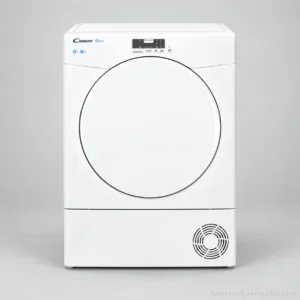
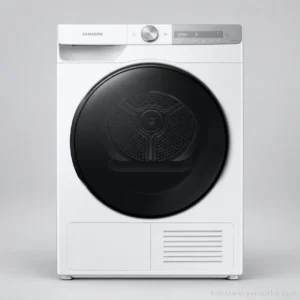
How to choose between the Candy EYE H8A2L-S and the Samsung DV90T7240BH
The anti-crease mechanism, capacity per programme, settings and energy consumption therefore do not establish a winner.
If your priority is to delay unloading, choose the model whose manual confirms an anti-crease phase that fits your schedule. If you mainly dry clothes that need ironing, prioritise settings suitable for those fabrics. Without confirmation, hold off on choosing rather than relying on the model name.
Mistakes to avoid
- Automatically assuming that anti-crease means a steam programme.
- Exceeding the permitted load for the selected programme.
- Expecting crease-free results on all fabrics.
- Forgetting to check access to the parts that need cleaning.
Key takeaways
Choose according to your laundry and your availability. The manual must confirm the anti-crease function you need. Then compare the appliances by usable load capacity, settings, energy consumption and the constraints of your home.
What should you know to reduce creasing after drying?
Should you clean the filters after every drying cycle?
Clean the lint filter after every cycle, following the instructions in the manual. A clogged filter restricts airflow and can affect drying performance. The anti-crease function does not replace this maintenance. Remove the lint and refit the filter correctly before restarting the appliance. For other filters and the condenser, follow the instructions specific to your tumble dryer.
Can you interrupt the anti-crease phase to remove your laundry?
You can usually remove your laundry during the anti-crease phase by following the manufacturer's procedure. Check the manual to find out how to stop the drum rotating and open the door. Make sure you distinguish this phase from the end of drying and the cooling phase, as the instructions may differ. Once you have removed the laundry, shake out the clothes and hang them up or fold them promptly to help prevent new creases from forming.
Are dryer balls compatible with an anti-crease function?
Whether you can use dryer balls depends on your appliance's instructions and the fabrics involved. An anti-crease function alone does not guarantee that dryer balls can be used. Check the tumble dryer manual and the dryer ball manufacturer's recommendations. These accessories do not replace appropriate loading or programme selection. To reduce creasing, avoid cramming laundry into the drum and remove clothes as soon as possible.
Can you use fabric softener before tumble drying?
Yes, if the clothing care labels and manufacturers' instructions allow it. Follow the dosage instructions on the fabric softener and check any restrictions for specific fabrics, particularly those whose technical properties need to be preserved. Adding more product does not guarantee fewer creases. To make ironing easier, focus on choosing a dryness level suited to your laundry, without always aiming for the driest possible result.
Can you stack a tumble dryer and a washing machine from different brands?
Yes, stacking appliances from different brands may be possible, but it requires explicitly confirmed compatibility and a suitable stacking kit. Similar dimensions alone are not a sufficient guarantee. Check which models the kit supports, the installation requirements and the appliance instructions. The tumble dryer goes above the washing machine. Even with a freestanding tumble dryer, never stack the appliances without fixings designed for this purpose.
How can you prevent unpleasant odours in a tumble dryer?
To prevent unpleasant odours, remove laundry promptly and maintain accessible components as instructed in the manual. Do not leave damp clothes sitting in the drum. Clean the lint filter and, depending on the installation, check the water tank or drainage system. A tumble dryer with direct condensate drainage also requires the hose to be checked. If an odour persists despite maintenance, identify its cause before using a scented product.