Best condenser tumble dryer with a heat pump 2026, picks and comparison
If you have no external air vent, this selection of heat pump condenser tumble dryers is particularly relevant to you; it is less suited to buyers who want to keep a vented appliance.
Prices recorded from retailers are for guidance only: they may have changed since. The current price is the one shown by the retailer. No price is shown for models sold only on Amazon. Amounts converted from reference prices in euros using an exchange rate from a specified date.
Why these models are listed here
- 3 selected models because they have the feature “Condenser with a heat pump” according to data published by manufacturers and retailers.
- View methodology →
- No brand pays to appear in this selection or to rank higher.
Our guides to tumble dryer
Why choose a heat pump condenser tumble dryer?
A heat pump tumble dryer also works by condensation
A heat pump tumble dryer removes moisture from laundry through condensation. These terms therefore do not describe incompatible technologies. The main difference from a conventional condenser dryer is how the heat needed for drying is generated and reused.
During the cycle, air passes through the laundry and picks up moisture. This moisture is then condensed into water, which is collected in a tank or directed to a drain where the appliance supports this. You do not need an air vent to the outside, but the installation requirements in the manual remain essential.
This option is particularly suitable for homes where installing an air vent would be difficult. To choose the best heat pump condenser dryer, start with your practical requirements:
- The available space and the clearance needed in front of the door.
- How easily you can empty the water tank.
- Whether a compatible water drain is available.
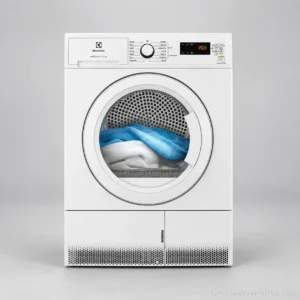
The Electrolux EDHF4812AC has a water tank and offers the option of direct drainage. This option should not be assumed to be available on every model. Even a freestanding tumble dryer needs a suitable location, with the clearances specified by the manufacturer.
Why reusing heat reduces energy requirements
The heat pump recovers energy from the drying circuit to reheat the air. This reuse of heat reduces the energy needed to keep the cycle running. This is particularly relevant if you regularly tumble dry your laundry, especially when the weather or limited space makes air drying difficult.
However, the technology alone is not enough to calculate your savings. Actual consumption also depends on the programme, load, spin cycle beforehand and maintenance. When comparing appliances, prioritise consumption figures measured using the same protocol and consistent energy labelling.
An analysis of the specifications shows that the available energy information does not allow a reliable comparison between the models in this selection. The claims for the Gorenje DHNE82 are inconsistent, while the certification mentioned for the Hisense DHQE800BW2 remains unclear. It is better to check the current label than rely on a general promise of savings.
When considering your budget, think in terms of market positioning. Across entry-level, mid-range and high-end models, consider which features actually meet your needs. An extra feature only justifies paying more if it is useful to you. Without sufficiently established market benchmarks, a numerical range would be misleading.
How low-temperature drying benefits fabrics
Moderate heat limits clothing's exposure to high temperatures. This is a practical benefit for households that frequently tumble dry suitable fabrics. The description of the Electrolux EDHF4812AC specifically highlights this low-temperature operation.
However, this technology does not make every garment suitable for tumble drying. The care label still takes priority, even with a heat pump. Sort fabrics, select the appropriate programme and respect its load limit: the appliance's maximum capacity does not necessarily apply to every programme.
The selection on this page will then help you compare models according to your priorities: space requirements, water collection, drum volume and useful features. The right choice is the one that suits your laundry and your home.
How do you choose a heat pump condenser tumble dryer?
To choose the best tumble dryer with a heat pump and condensation drying, start with your installation constraints, the amount of laundry to dry and water collection. Analysis of the specifications shows that these criteria do more to distinguish the models in this selection than the stated capacity, which is identical across all 3 appliances. A heat pump also works through condensation: these terms do not describe 2 incompatible technologies.
| Model | Listed price | Capacity | Drying capacity | Noise level | Maximum noise level |
|---|---|---|---|---|---|
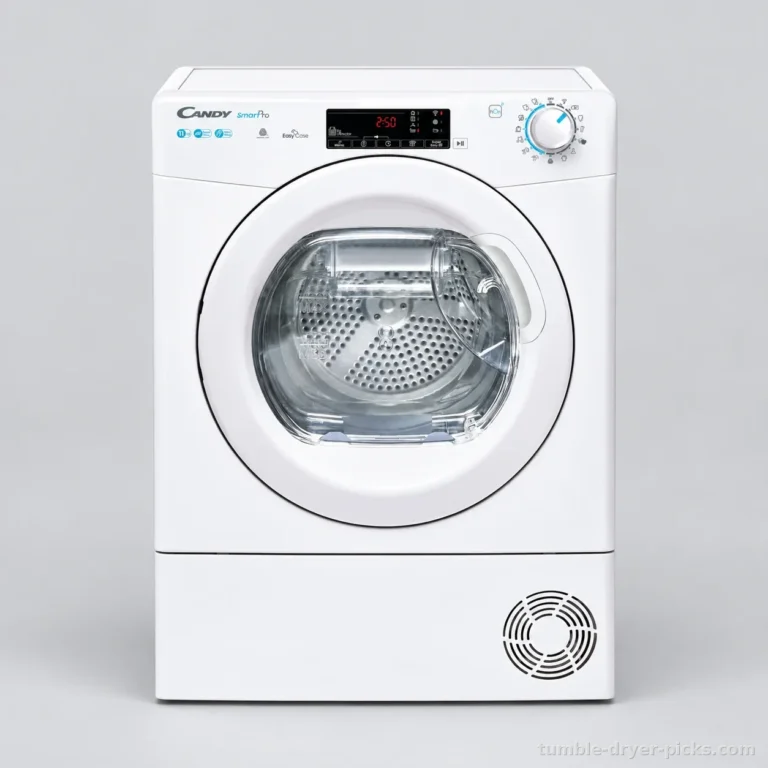
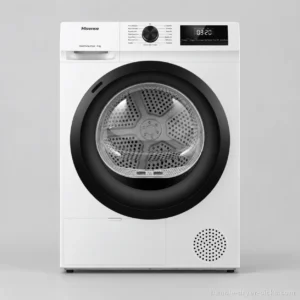
| Hisense DHQE800BW2 | Check price with the retailer | 8 kilograms | N/A | N/A | N/A |
| Electrolux EDHF4812AC | Check price with the retailer | 8 | 8kg | 66dB(A) | quiet (66 db) |
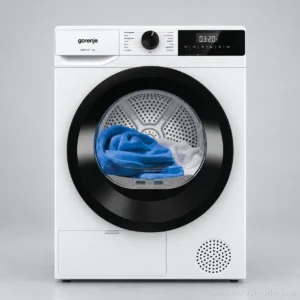
| Gorenje DHNE82 | Check price with the retailer | N/A | 8 kg | 64 dBA | quiet (64 db) |
The comparison highlights differences in features. When deciding, focus on those that address a specific constraint in your home. An extra function cannot make up for a door that opens the wrong way or a depth that does not fit your room.
Which capacity suits your laundry loads
The Hisense DHQE800BW2, Electrolux EDHF4812AC and Gorenje DHNE82 list a drying capacity of 8 kg. However, start with the laundry you actually put in the tumble dryer. If you dry some items on a drying rack, your washing machine’s capacity alone will not determine what you need.
Also distinguish between the maximum load and drum volume. Electrolux lists 118 L, compared with 100 L for Hisense and Gorenje. This larger volume is worth considering for bulky items, but does not allow a heavier load. Check the manual for the permitted load for each programme and whether your bed linen is suitable.
How to check whether the appliance will fit
Measure the installation space, doorways and the clearance needed to open the drum door. Also allow the clearances specified in the manual. The appliance’s depth alone does not guarantee that it will fit into a recess with its connections.
The dimensions listed for the Hisense DHQE800BW2 contain conflicting information. Have its exact overall dimensions confirmed before ordering. To choose between the other 2 appliances, focus on the door: the Electrolux door is reversible, while the Gorenje door is hinged on the right and cannot be reversed.
If you are looking for a built-in tumble dryer, do not confuse a removable top with suitability for built-in installation. The Electrolux has a removable top, but removing it requires a cover plate. Installation requirements still need to be checked.
Which water collection system should you choose
A tank is suitable when there is no drain nearby. However, it needs regular emptying. For the Gorenje DHNE82, the guidance recommends emptying it after each use where possible.
The Electrolux EDHF4812AC lets you choose between a tank and direct drainage. This option is useful if you want to avoid emptying the tank and have a suitable connection. The Y-connector is not included.
Do not assume that the other appliances support this installation. If you specifically want a tumble dryer with a drain hose included, check connection compatibility and the supplied contents separately: direct drainage capability does not guarantee that all the necessary accessories are included.
How to compare energy consumption without confusing the labels
To compare electricity consumption, look for current energy labels and figures established using the same protocol. A heat pump recovers heat to reduce energy requirements, but this technology alone is not enough to rank the appliances.
The energy information for Gorenje is inconsistent, while the certification mentioned for Hisense remains unclear. These details therefore do not allow a reliable comparison. Ask for the label matching the exact model reference.
Finally, distinguish between energy class and condensation efficiency. The latter concerns moisture collection. It does not replace consumption data. Without comparable figures, it is better to leave the ranking undecided than arbitrarily name an appliance as the most energy-efficient.
Which features matter in your daily routine
For installation near a living area, Gorenje lists 64 dBA and Electrolux 66 dB(A). This difference deserves attention, but neither appliance is inaudible. Location remains a key factor in your choice.
If you are looking for a tumble dryer with a delayed start, the Electrolux offers a delayed start of 20 hours. The Gorenje lists a delayed finish: choose according to whether you want to schedule the start or set when your laundry will be ready.
Hisense describes its Auto Dry function, which adjusts drying time by monitoring residual moisture and temperature. This is a specific feature to consider if automatic drying adjustment is a priority for you.
How to set your budget without overpaying for secondary features
Across entry-level, mid-range and high-end options, establish your requirements before comparing market positioning. A suitable connection, a convenient door and verifiable energy information should take priority over a long list of programmes.
Include maintenance, spare parts availability and warranties in the total cost of ownership. Check the manual for filter access and required maintenance tasks. None of these points should be assumed based on the brand alone.
Mistakes to avoid
- Ordering without confirming the dimensions and door clearance.
- Comparing energy ratings from different scales.
- Confusing drum volume with maximum load capacity.
- Assuming that direct drainage and its accessories are always included.
Key takeaways
Choose the Electrolux if direct drainage and a reversible door meet your requirements. Look at the Gorenje for its stated noise level, while checking which way the door opens. Consider the Hisense for Auto Dry, after confirming its dimensions. In every case, make compatibility with your installation the first filter in your selection process.
What should you know before choosing a tumble dryer?
How long does a heat pump tumble dryer cycle take?
The duration depends on the programme, load, fabric and moisture remaining after the spin cycle. There is therefore no single cycle duration for a heat pump tumble dryer. Compare the times listed in the manuals for the same programme and a similar load. A tumble dryer with a delay start function lets you postpone the start, but this function does not shorten drying time.
How do you clean the filters and condenser in a heat pump tumble dryer?
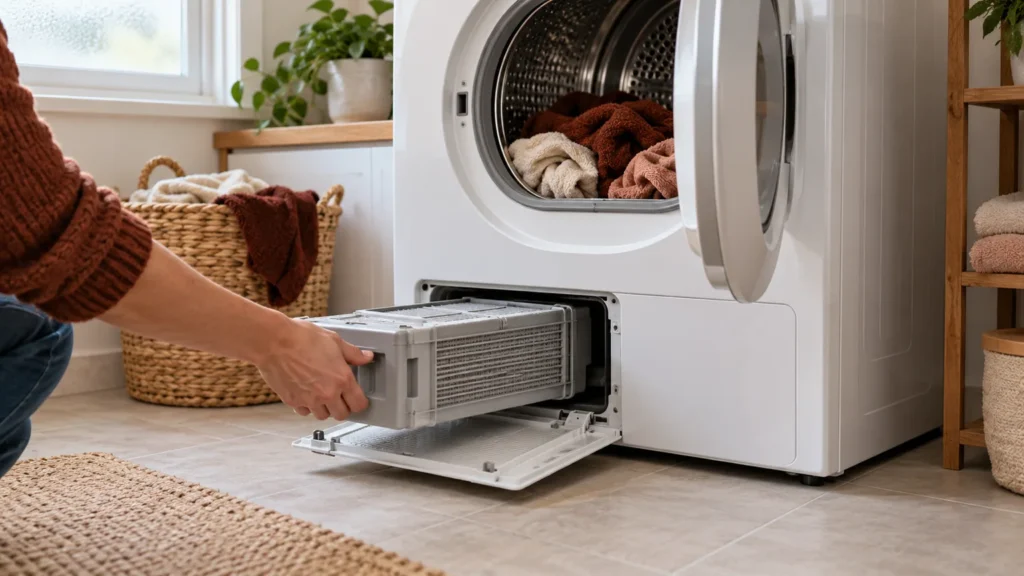
Clean the filters and maintain the condenser according to the instructions for your appliance. Remove lint from accessible filters as often as specified in the manual. If rinsing is permitted, follow the drying instructions before refitting them. For the condenser, check the manufacturer's procedure before carrying out any work: access and maintenance requirements vary depending on the design. Unplug the appliance before any operations that require it.
Can you stack a heat pump tumble dryer on a washing machine?
Yes, if the appliances are compatible and their manufacturer permits this installation with a suitable stacking kit. A tumble dryer being described as freestanding does not confirm that it can be stacked. Check the manuals for compatible models, dimensions and securing requirements. The tumble dryer goes above the washing machine. Do not simply place it on top: the stability of the stack must be ensured in accordance with the instructions.
When can you switch on a tumble dryer after delivery?
Observe the waiting period specified in the manual before switching it on for the first time. Transport conditions, particularly the position of the appliance, may require a waiting period to protect the heat pump circuit. No single waiting period applies to all models. If you do not know how the appliance was transported, ask the manufacturer for confirmation. Use this time to check the installation, remove the specified protective materials and check that the appliance is level.
Why is the laundry still damp at the end of the programme?
Laundry may still be damp because of an unsuitable programme, an excessive load, insufficient spinning or clogged filters. First, check the intended result: some settings deliberately retain moisture to make ironing easier. Then follow the load limit for the selected programme and separate fabrics of very different thicknesses. If the problem persists despite maintenance in accordance with the instructions, consult the troubleshooting guidance in the manual.
Can you reuse the water collected in the tank?
The water in the tank is not drinkable and should not be treated as clean distilled water. It may contain fibres and laundry detergent residues. Do not use it for drinking, cooking or filling an appliance without checking that appliance manufacturer's recommendations. For an iron in particular, consult its manual before reusing the water. If in doubt, empty the tank into a suitable drain.
Why does a heat pump tumble dryer stop before the end of the cycle?
An early stop may be the normal end of an automatic programme or indicate a problem that needs checking. On the Hisense DHQE800BW2, the Auto Dry function adjusts drying time according to residual moisture and temperature. If the laundry is still wet, check the tank, filters and any messages displayed. A small load or an unsuitable programme can also affect detection. Consult the manual before running several more cycles.